
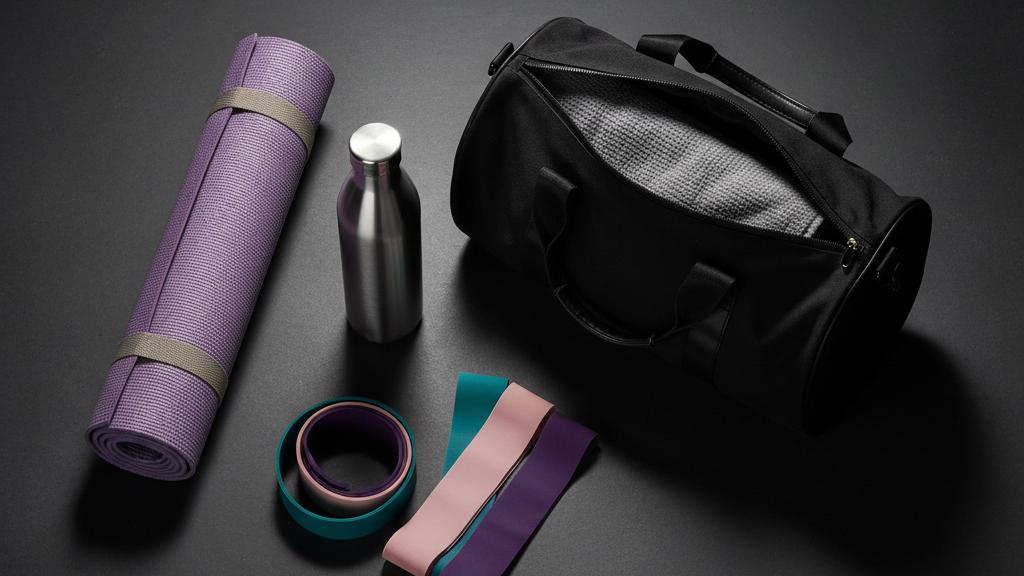
Jede ernsthafte Frau, die trainiert, hat mindestens einmal die gleiche Erfahrung gemacht: Sie kommt ins Fitnessstudio, öffnet ihre Tasche und stellt fest, dass etwas Wesentliches fehlt. Vielleicht ist es ihr Deo, ihr Haargummi oder der Proteinriegel, auf den sie nach dem Training gehofft hatte. Das Ergebnis ist eine frustrierende Trainingserfahrung, die mit einer besser organisierten Tasche komplett vermieden worden wäre.
Das Packen einer Sporttasche klingt trivial. In der Praxis ist es eine kleine, aber bedeutungsvolle Form von Trainingsdisziplin. Eine gut gepackte Tasche bedeutet weniger Ablenkungen vor, während und nach dem Training – Sie können sich ganz auf die Arbeit konzentrieren. Fitnessstudio-Taschen-Essentials für Frauen Gehen Sie über eine generische Liste von Dingen hinaus. Sie spiegeln Ihren Trainingsstil, Ihren Zeitplan und die Art von Athlet, die Sie sein möchten, wider.
Dieser Leitfaden deckt alles ab: die wichtigsten Utensilien, die in jede Damentasche fürs Fitnessstudio gehören, die Artikel zur Erholung und Hygiene, die den Übergang nach dem Training erleichtern, die Ernährungswerkzeuge, die die Leistung unterstützen, und die organisatorischen Gewohnheiten, die alles im Griff behalten. Egal, ob Sie fünfmal pro Woche vor der Arbeit trainieren oder drei abendliche Trainingseinheiten in einen vollen Zeitplan quetschen, die richtige Organisation Ihrer Tasche verändert, wie Sie sich dem Gang ins Fitnessstudio gegenübergestellt fühlen.
Die Kern-Trainingsgrundlagen
Die Grundlage jeder Sporttasche ist die Kleidung, in der Sie tatsächlich trainieren. Diese Teile sollten am Abend zuvor gepackt, automatisch überprüft und nach jeder Trainingseinheit sofort wieder aufgefüllt werden, damit sie nie fehlen, wenn Sie sie brauchen.
Trainingsschuhe verdienen ihr eigenes Fach. Turnschuhe sollten nicht gleichzeitig als Alltagsschuhe dienen – sie sammeln Straßenschmutz, verlieren schneller ihre Dämpfung und bringen Bakterien von draußen auf den Fitnessboden. Eine spezielle belüftete Schuhtasche hält sie von Ihrer sauberen Kleidung getrennt und verlängert ihre Lebensdauer.
Trainingsoutfit Die Grundlagen sind nicht verhandelbar – Leggings oder Shorts, ein Sport-BH und ein atmungsaktives Oberteil oder Tanktop. Wichtig ist, dass es sich um spezielle Trainingskleidung handelt und nicht um Kleidung für den allgemeinen Gebrauch. Wenn deine Trainingskleidung in deiner Sporttasche lebt, verschwendest du nie mentale Energie damit, sie zu suchen.
Über die Grundlagen hinaus hängen Ihre Trainingszubehör von dem ab, was Sie tun:
- Liftinghandschuhe oder Handgelenkbandagen — unerlässlich für das Krafttraining, insbesondere für Übungen mit der Langhantel und schwere Züge
- Widerstandsbänder — kompakt und vielseitig, nützlich für Aufwärmübungen und Zusatzübungen
- Seilspringen – nimmt minimalen Platz ein, fügt Cardio-Optionen hinzu, ohne von Geräten abhängig zu sein
- Knieschoner oder Fußgelenkbandage — wenn du schwere Dinge hebst oder empfindliche Gelenke hast
- Faszienrolle oder Massageball wenn dein Fitnessstudio diese nicht anbietet und du Erholung priorisierst
Der Schlüssel ist, die Accessoires proportional zur Größe Ihrer Tasche zu halten. Eine kompakte Sporttasche eignet sich am besten, wenn Sie wählerisch sind – bringen Sie nur das mit, was Sie tatsächlich bei jeder Trainingseinheit verwenden, nicht das, was Sie vielleicht theoretisch eines Tages verwenden könnten.
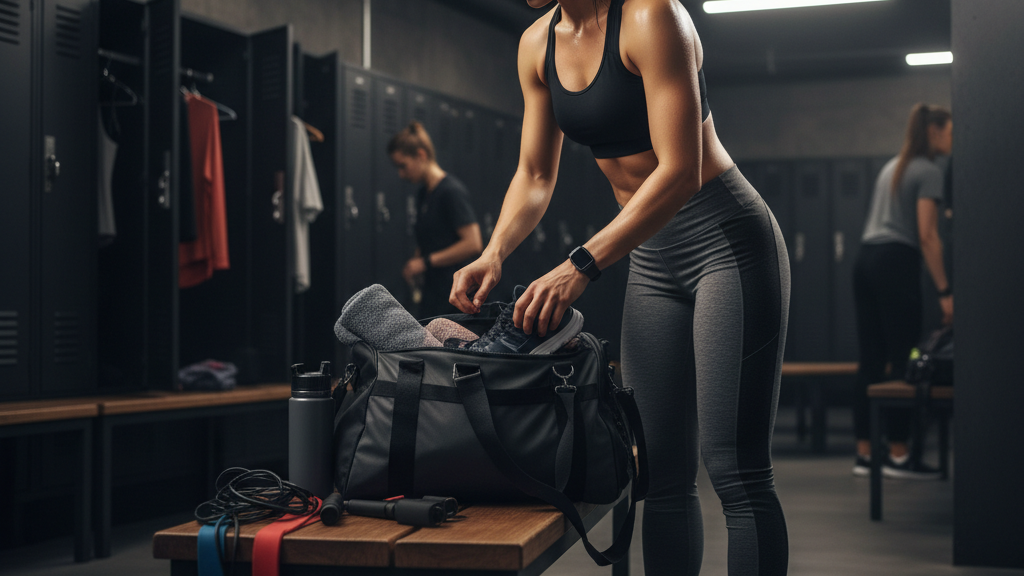
Hygiene- und Erholungsartikel
Der Übergang nach dem Fitnessstudio ist, wo viele Frauen Zeit und Energie verlieren. Ein gut organisiertes Hygiene-Kit bedeutet, dass Sie duschen, sich erfrischen und gestresst für den Rest Ihres Tages oder Abends bereit sein können. Das Ziel ist ein kompaktes, vollständiges Kit, das Sie nie wieder neu zusammenstellen müssen.
Bauen Sie eine spezielle Kulturtasche, die dauerhaft in Ihrer Sporttasche verbleibt und automatisch wieder aufgefüllt wird, wenn die Artikel zur Neige gehen:
- Reisegröße Duschgel und Shampoo — in wiederverwendbare Silikontiegel umfüllen, um Gewicht und Platz zu sparen
- Mikrofaserhandtuch — ein hochwertiges Mikrofaserhandtuch ist etwa ein Drittel so groß und schwer wie ein normales Baumwollhandtuch, trocknet schneller und ist besser für den Einsatz im Fitnessstudio geeignet
- Deo — Bewahren Sie ein spezielles Deodorant für die Sporttasche auf, damit Sie es nicht von zu Hause mitnehmen müssen
- Gesichtsreiniger oder Mizellenwasser-Tücher — Training öffnet die Poren; das Waschen des Gesichts nach dem Training beugt Hautunreinheiten vor
- Feuchtigkeitscreme mit LSF — für den Arbeitsweg und das Erholungsfenster nach dem Fitnessstudio
- Haargummis und Trockenshampoo praktische Notwendigkeiten für die Haarverwaltung nach der Sitzung
- Flipflops — für Fitnessstudio-Duschen; nicht verhandelbarer Hygieneschutz
Eine Tasche für Frauen, die hart trainieren
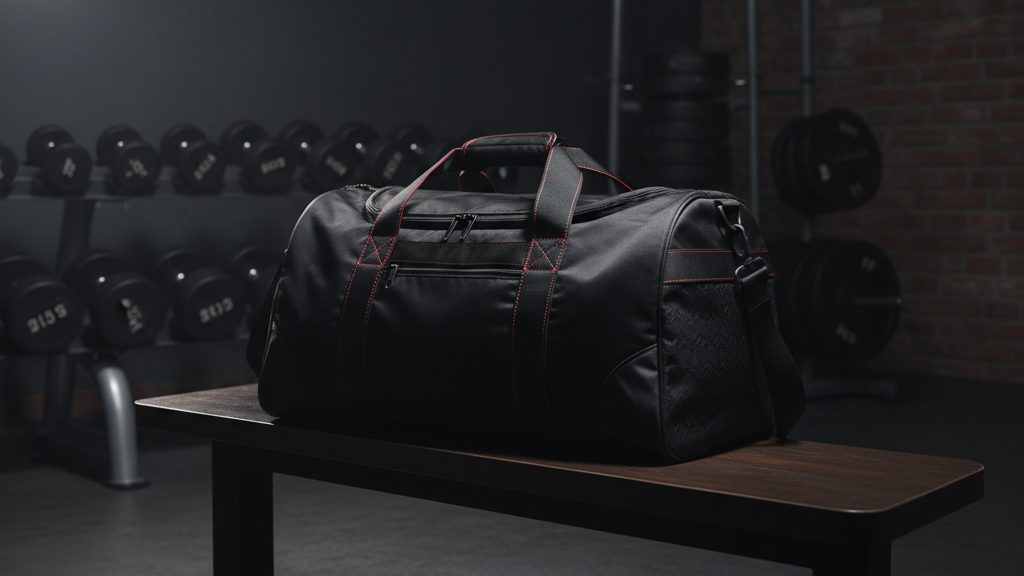
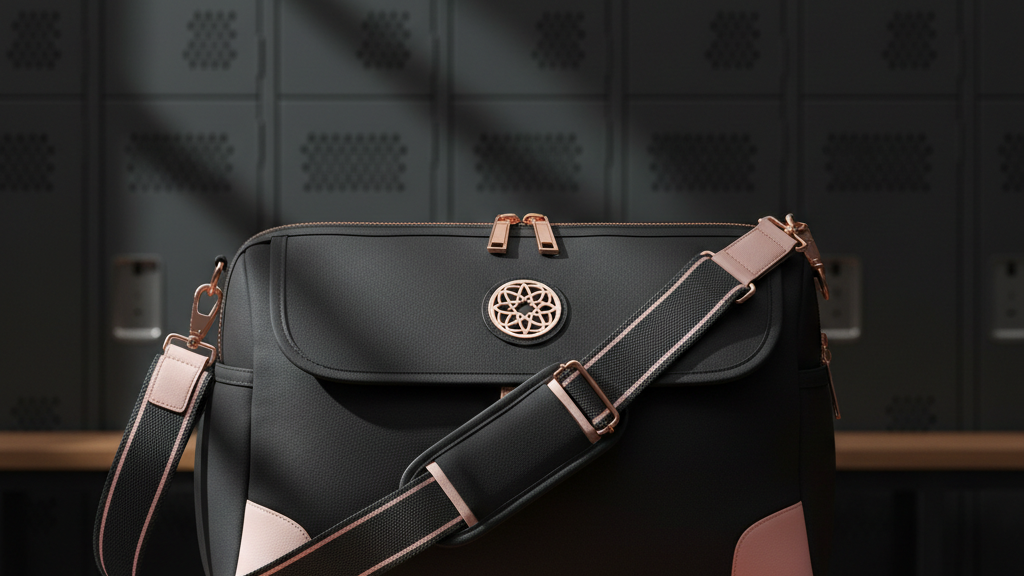
Die Onixxx Magnetic Gym Bag hält Ihre Essentials perfekt organisiert – belüftetes Schuhfach, isoliertes Fach, magnetische Befestigung, damit Ihre Tasche nie den Boden berührt. Gebaut für ernsthafte Sportler.
Ernährungs- und Flüssigkeitszufuhr-Grundlagen
Was Sie rund um Ihre Trainingseinheit essen und trinken, hat direkten Einfluss auf Leistung und Erholung. Eine gut gepackte Sporttasche enthält die Ernährungsutensilien, die Ihre Ziele unterstützen – nicht nur das Training selbst, sondern auch die Stunde davor und das Erholungsfenster danach.
Wasserflasche ist der wichtigste Gegenstand in Ihrer Sporttasche. Dehydrierung beeinträchtigt Kraft, Ausdauer und kognitive Funktionen – selbst eine leichte Dehydrierung (1–2% des Körpergewichts) führt zu einer messbaren Leistungsminderung. Eine isolierte Edelstahlflasche hält das Wasser während des gesamten Trainings kühl und dient auf dem Heimweg gleichzeitig als Mittel zur Flüssigkeitszufuhr nach dem Training.
Pre-Workout- und Intra-Workout-Ernährung abhängig von deinem Trainingsstil:
- Pre-Workout-Snack — eine Banane, Reiswaffeln mit Nussbutter oder ein kleiner Proteinriegel 30–60 Minuten vor dem Training
- BCAAs oder Elektrolyte — nützlich für längere Trainingseinheiten (60+ Minuten) oder in warmen Umgebungen, in denen der Schweißverlust erheblich ist
- Proteinshake — eine Shaker-Flasche mit vorgemessenem Proteinpulver für das Regenerationsfenster nach dem Training (optimal sind 30–60 Minuten nach dem Training)
Für Frauen, die nach der Arbeit trainieren und direkt zum Abendessen gehen, oder die morgens vor dem Frühstück trainieren, beseitigen diese Gegenstände in der Tasche die Hürde, sie jedes Mal einpacken zu müssen. Portioniere dein Protein im Voraus in verschließbare Behälter, bewahre einen Proteinriegel als ständige Reserve auf und fülle ihn sofort nach Gebrauch wieder auf.
Organisation: Wie man intelligenter packt
Der Unterschied zwischen einer nützlichen und einer chaotischen Sporttasche liegt fast ausschließlich in der Organisation. Dieselben Gegenstände, planlos eingepackt, erzeugen Frustration; dieselben Gegenstände, mit Bedacht verpackt, schaffen Effizienz. Hier sind die Prinzipien, die den Unterschied ausmachen.
Nutze Abteile bewusst. Jeder Gegenstand sollte einen festen Platz haben, an den er nach jeder Benutzung zurückkehrt. Schuhe kommen ins Schuhfach. Nasse Gegenstände gehören in die wasserdicht ausgekleidete Tasche. Wertgegenstände (Handy, Schlüssel, Brieftasche) kommen in die äußere Tasche für schnellen Zugriff. Wenn das Packen automatisch abläuft, musst du nie darüber nachdenken – du tust es einfach.
Das Kulturbeutelsystem. Bewahren Sie alle Hygieneartikel in einem einzigen, dafür vorgesehenen Beutel auf, der dauerhaft in der Tasche verbleibt. Wenn die Vorräte zur Neige gehen, fügen Sie sie sofort Ihrer Einkaufsliste hinzu. Nehmen Sie den Beutel niemals aus der Tasche, außer zum Nachfüllen. Dies beseitigt das Risiko, einzelne Gegenstände zu vergessen.
Sofort nach Gebrauch wieder auffüllen. Der häufigste Grund für fehlende Gegenstände in der Sporttasche ist das Vergessen, etwas nachzufüllen, nachdem man es benutzt hat. Bauen Sie die Gewohnheit auf, Ihre Tasche am Abend nach jeder Trainingseinheit wieder aufzufüllen, nicht am Morgen davor – am Abend haben Sie mehr Zeit und geistige Kapazität.
Wöchentliche Zurücksetzung. Nehmen Sie einmal pro Woche alles aus Ihrer Tasche, lüften Sie sie aus, wischen Sie das Innere ab, waschen Sie darin vergessene Trainingskleidung und packen Sie sie neu. Eine wöchentlich gepflegte Sporttasche bleibt auf Dauer geruchsfrei und organisiert. Mehr Details zur Strukturierung Ihrer kompletten Ausrüstung finden Sie in unserem Leitfaden zu was man in eine Sporttasche packt.
💧 Kaltes Wasser vom Aufwärmen bis zum Abkühlen
Die Onixxx Magnetic Water Bottle lässt sich an Ihrer Tasche befestigen oder an jeder Metalloberfläche im Fitnessstudio anbringen. Isolierter Edelstahl hält Ihr Wasser während der gesamten Trainingseinheit kalt – kein abgestandenes Wasser mehr, wenn Sie es am dringendsten brauchen.
Die richtige Tasche für Ihre wichtigsten Dinge auswählen
Die Tasche selbst ist genauso wichtig wie ihr Inhalt. Eine schlecht konzipierte Tasche erschwert die Organisation, anstatt sie zu erleichtern – Taschen an den falschen Stellen, Reißverschlüsse, die dem täglichen Gebrauch nicht standhalten, oder ein Hauptfach, das so groß ist, dass alles auf den Boden rutscht. Hier erfahren Sie, worauf Sie bei der Auswahl einer Sporttasche für die Trainingsutensilien von Frauen achten sollten.
Größe Für die meisten Frauen, die in einem Standard-Fitnessstudio trainieren, liegt der praktische Bereich zwischen 20 und 30 Litern. Unter 20 Litern müssen Sie Kompromisse bei dem eingehen, was Sie mitnehmen. Über 30 Litern wird die Tasche für den täglichen Weg sperrig. Eine Tasche mit 22–28 Litern und durchdachtem Fachdesign fasst ein komplettes Set ohne übermäßigen Ballast.
Belüftetes Schuhfach Nicht verhandelbar. Schuhe sind der hygienisch kritischste Gegenstand in Ihrer Tasche – sie müssen von sauberer Kleidung isoliert und belüftet werden. Eine belüftete Bodentasche erfüllt beide Funktionen.
Wasserdichte Innentasche Für feuchte Handtücher nach dem Duschen, nasse Badesachen oder verschwitzte Trainingskleidung. Hält Feuchtigkeit zurück und verhindert, dass sie Ihre restliche Ausrüstung beeinträchtigt.
Außentasche für Wasserflasche: Hält Ihre Flasche zugänglich, ohne das Hauptfach zu öffnen, und schafft zusätzlichen Platz im Inneren für alles andere.
Robustes Material: Suchen Sie nach 420D- oder 500D-Nylon – abriebfest, wasserabweisend und leicht abzuwischen. Vermeiden Sie dünnes Polyester für den täglichen Gebrauch; es verschlechtert sich schnell bei regelmäßigem Be- und Entpacken. Eine vollständige Aufschlüsselung, wie Sie zwischen Taschenstilen wählen, finden Sie in unserem Leitfaden unter wie Sie Ihre Sporttasche auswählen.
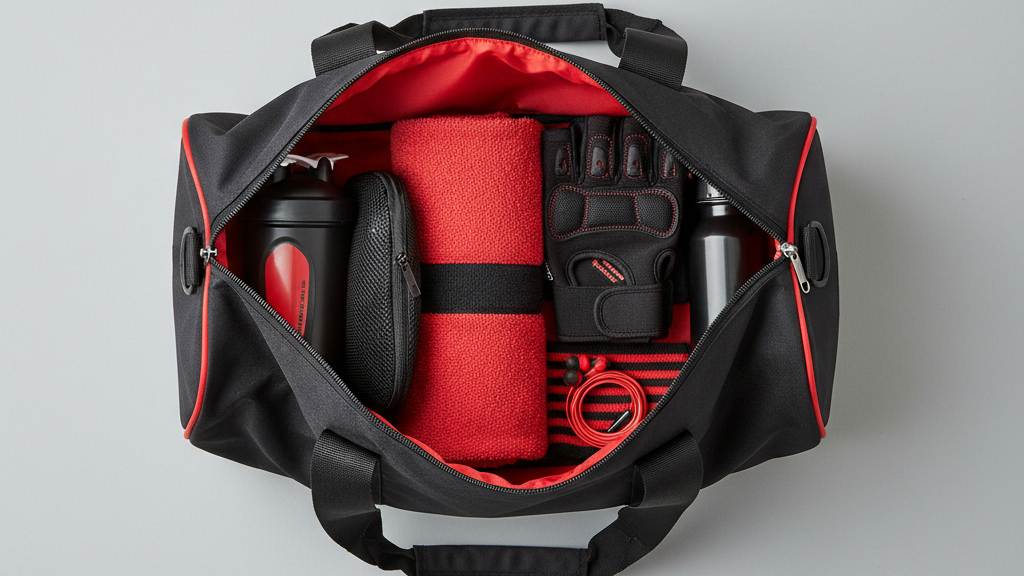
FAQ — Wesentliches für die Sporttasche Damen
Was sollte jede Frau in ihrer Sporttasche haben?
Die wesentlichen Dinge sind: Trainingsschuhe (in einem eigenen Fach), ein vollständiges Trainingsoutfit, eine Trinkflasche, ein Mikrofaserhandtuch, ein kompakter Kulturbeutel und eine Proteinquelle für nach dem Training. Alles andere hängt von Ihrem Trainingsstil und Ihrem Zeitplan ab.
Wie vermeide ich, dass meine Sporttasche stinkt?
Lüften Sie Ihre Tasche nach jeder Trainingseinheit gut aus – schließen Sie sie niemals mit feuchten Gegenständen darin. Benutzen Sie ein Mikrofasertuch ( trocknet schneller als Baumwolle ), legen Sie ein Zedernholz-Säckchen oder einen Aktivkohle-Geruchsabsorber hinein und führen Sie alle ein bis zwei Wochen eine gründliche Reinigung durch, bei der Sie die Tasche leeren, auswischen und neu packen. Das Waschen Ihrer Tasche alle 2–3 Wochen verhindert die Ansammlung von Bakterien.
Welche Größe von Sporttasche ist am besten für Frauen geeignet?
22–28 Liter sind die ideale Größe für die meisten Frauen, die in einem Standard-Fitnessstudio trainieren. Die Tasche ist kompakt genug für den Weg zur Arbeit, aber geräumig genug, um für eine vollständige Garnitur Wechselkleidung, Schuhe, Accessoires und ein Kulturtäschchen ohne Zusammendrücken unterzubringen.
Was ist das beste Handtuch für eine Sporttasche?
Ein Mikrofaserhandtuch ist klar die beste Wahl für den Fitnessstudiogebrauch. Es ist etwa ein Drittel so groß und schwer wie ein Baumwollhandtuch, nimmt Feuchtigkeit effizient auf, trocknet in 20–30 Minuten (im Gegensatz zu Stunden bei Baumwolle) und ist leicht häufig zu waschen. Achten Sie auf eine Größe von 60 × 120 cm – groß genug für die Benutzung nach dem Duschen, aber kompakt in der Tasche.
Sollte ich Nahrungsergänzungsmittel in meiner Sporttasche aufbewahren?
Ja. Eine Proteinriegel oder portioniertes Proteinpulver in Ihrer Tasche bedeutet, dass Sie nie das Zeitfenster für die Erholung nach dem Training verpassen, selbst wenn Sie spät dran sind oder sich Ihre Pläne ändern. Behalten Sie einen haltbaren Notvorrat (Proteinriegel, Nüsse) dauerhaft in der Tasche und packen Sie verderbliche Lebensmittel (Banane, griechischer Joghurt) frisch für jede Trainingseinheit ein.

 English
 Français
 Deutsch
 Dansk
Dansk Español
 Suomi
Suomi Italiano
 Norsk bokmål
 Português
 Svenska